Heliotextil is strengthening its focus on technology by developing Trace4Gear, its own product identification and traceability platform, which it presented at Techtextil in Frankfurt last April. The solution aims to meet the requirements of the forthcoming Digital Product Passport, while also providing management and communication features tailored to customers’ needs.
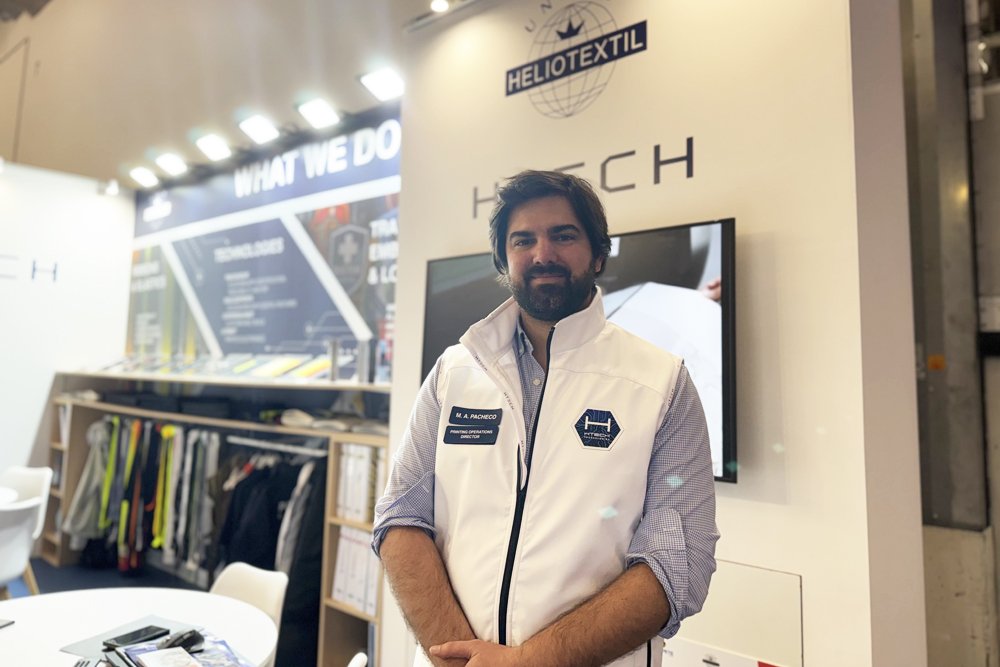
«It is not just about passing information on to the customer, but about creating a channel for interaction», explains Miguel Alberto Pacheco, printing operations director at Heliotextil and a third-generation member of the family business.
The platform is being developed with a modular architecture that will allow different functionalities to be integrated, from individual item identification to stock management throughout the supply chain. Planned applications include workwear tracking for uniform rental companies and industrial laundries, making it possible to identify each garment, link it to its user and monitor collection and washing processes.
Another feature is product tracking through a dedicated module that can also be applied to non-textile items, particularly for locating and recovering lost objects.
The concept, which is being tested and developed through pilot projects, is expected to be validated by the end of 2026. «I really enjoy talking to customers because they are very practical; they already know what their challenges are and what they need. And it is very interesting to develop solutions based on this from the outset and to have these pilot projects», states Miguel Alberto Pacheco, who at the time highlighted the positive response from potential customers, some of whom had already expressed an interest in starting to use the platform.
Developed in-house, with Portuguese partners involved in preparing the applications, Trace4Gear was designed to work with identifiers from other suppliers, provided they are certified by Heliotextil. The platform can also be integrated with companies’ ERP systems, adapting to their existing technological infrastructure.
The project represents an evolution of Heliotextil’s accumulated experience in electronic identification, particularly with NFC technologies and event management and access control platforms. The company is now seeking to extend these capabilities to information management and product tracking throughout their use.
In parallel, it has developed a transfer that combines serialised information, an individual QR code and NFC technology in a single element. «I would say it is the most complex transfer we have ever produced», the director acknowledges, highlighting the combination of different technologies in a single identification medium.
Investment in customisation
Another focus for Heliotextil is expanding its finished-garment customisation services, including a new industrial facility dedicated to receiving and processing items sent by customers, with the installation of heat presses and areas for storage, quality control and packaging.
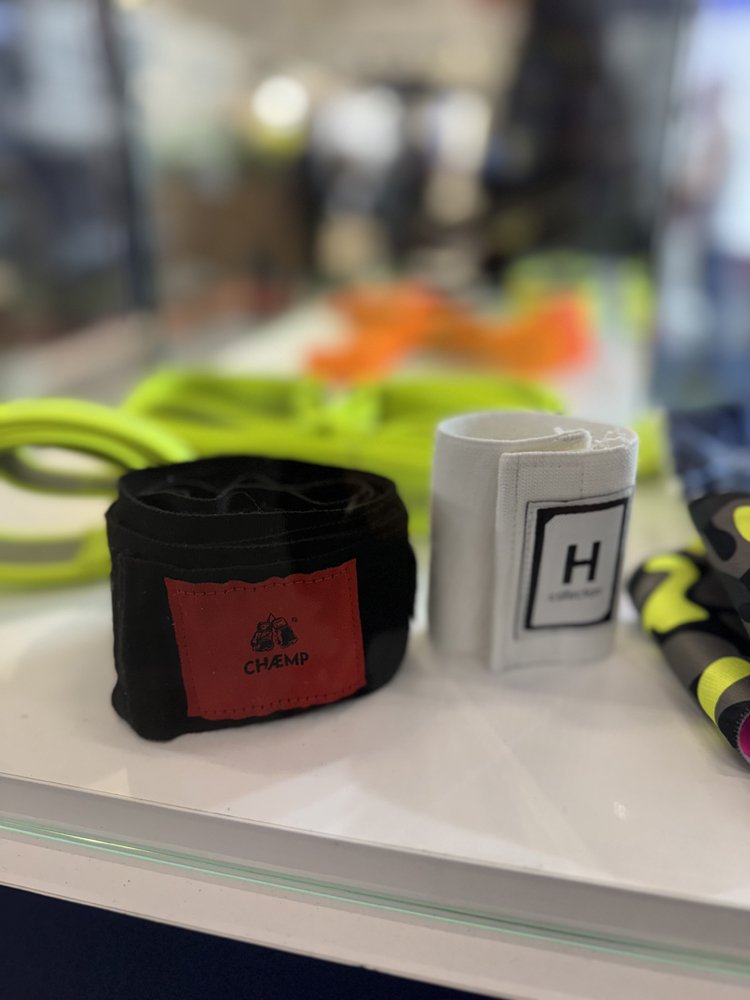
This is an activity that Heliotextil was already carrying out, but on a smaller scale, and which it now intends to expand, taking on a wider range of operations, from the production and application of decorative elements to the preparation and dispatch of finished items.
«At the moment, the market imports a great deal of product, but not fully processed product. It imports T-shirts, but the decoration is done more locally», observes Miguel Alberto Pacheco, explaining the investment in a service that allows brands and suppliers to customise items at a later stage of production.
This strategy complements the company’s traditional range of labels, elastics, trimmings, transfers and badges, which it has increasingly been directing towards more technical applications.
At Techtextil, Heliotextil presented high-visibility elastics, products with silicone finishes to improve grip and a range of flame-retardant products, intended particularly for protective clothing against fire and military applications. Among the new developments was also the seamless bonding tape collection, comprising elastic tapes with heat-activated adhesive properties that make it possible to create three-dimensional finishes, conceal seams or even replace them in certain applications. The range also included transfers resistant to industrial laundering, with reflective properties and flame-retardant finishes, as well as badges combining different printing, weaving and embroidery technologies.
«Usually, we have one industry that is very focused on textiles and another that is very focused on printing. By bringing the two together [at Heliotextil], we are able to create products that are highly differentiated in the market», Miguel Alberto Pacheco explains.
The company also showcased new products with flame-retardant properties and inks with specific infrared characteristics, seeking opportunities in security-related applications.
Positive expectations
International markets account for more than 50% of Heliotextil’s business, with Europe and South America standing out as the main destinations. Following a 2025 that Miguel Alberto Pacheco describes as challenging due to changes in demand, Heliotextil entered 2026 with positive expectations, supported by the strengthening of its sales operations and new developments.
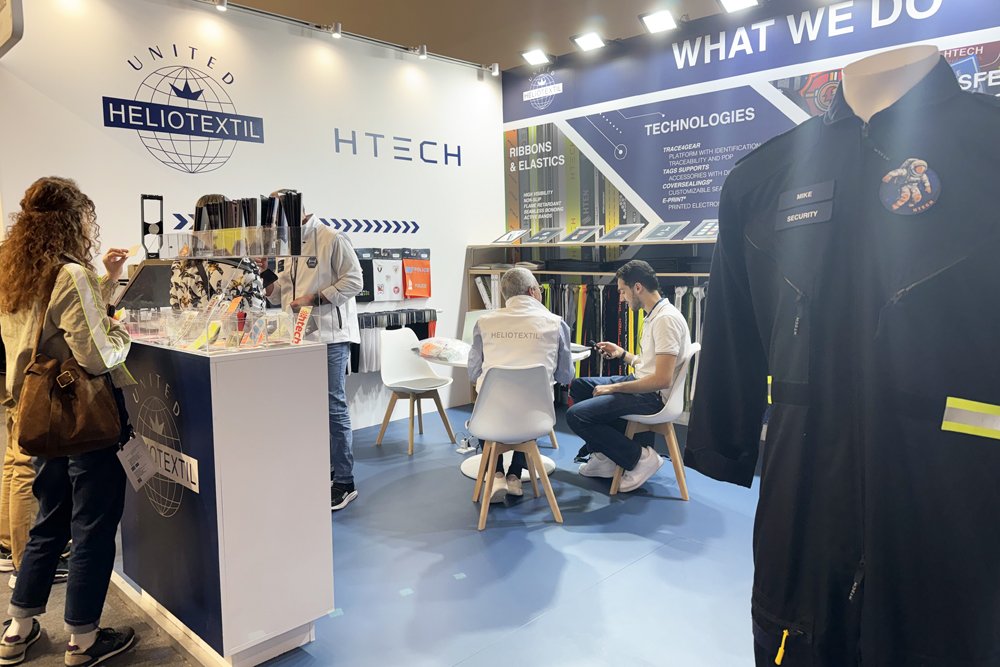 Stand Heliotextil – Techtextil 2026
Among the products contributing to growth is Supertex, a badge combining a sublimation-printed textile base with high-definition transfer finishes, mainly intended for the customisation of sportswear. According to the printing operations director, the product recorded very significant growth in 2025, a trend the company expected to continue in 2026.
«I think the investment we have made in our sales operations, in strengthening the sales department, has paid off», he believes. «I am convinced that this will be a good year thanks to the investments we have made and as a result of the projects we have been pursuing and the new products we have introduced to the market», concludes Miguel Alberto Pacheco.