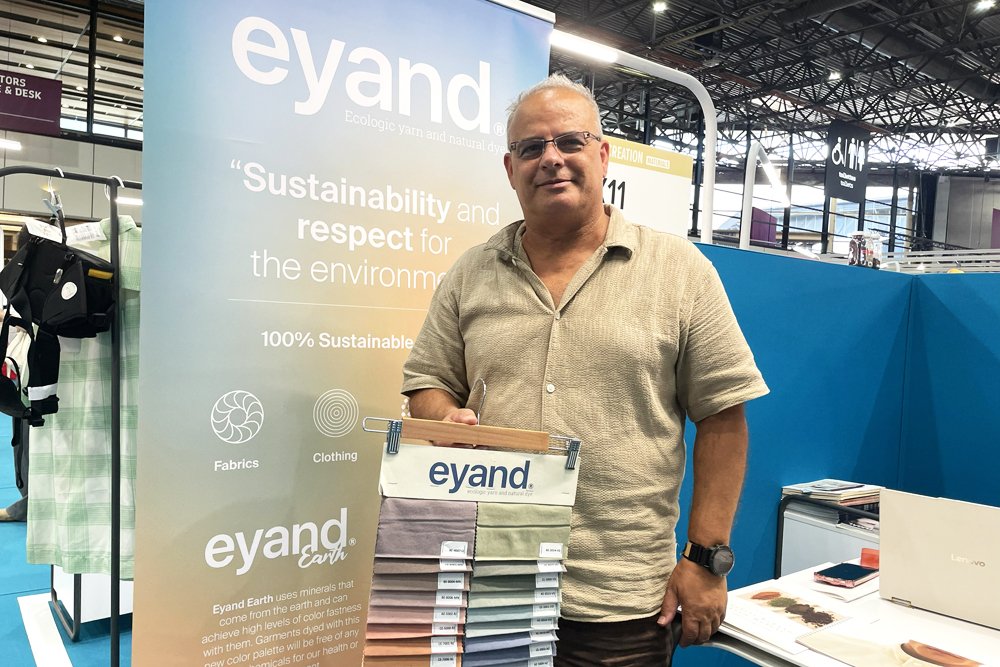
The TIS Group developed Eyand, an acronym for Ecologic Yarn and Natural Dye, as a brand for its garment dyeing process using pigments of natural and recycled origin. The project began six years ago with the creation of Natclo, the TIS Group’s dyeing unit, initially located at the former premises of Marpei – Estamparia Têxtil, Tinturaria e Acabamentos, in Ponte, with the aim of developing an alternative to conventional dyeing. Three years ago, Natclo built new facilities in Vizela, where it transferred its operations and where it currently maintains its dyehouse.
Although the project was conceived in Barcelona, one of the locations of the TIS Group, which has been operating in the textile and clothing industry for more than 30 years, Natclo concentrates its dyeing operations in Portugal, where the international group has been working for over 25 years. The decision reflected the proximity of the various production stages, as a large part of the supply chain was already established in Portugal. «We felt that there could not be such a distance [to Barcelona] between purchasing the yarn and dyeing. So, we quickly realised that dyeing had to be carried out in Portugal», Barth Perez, commercial director of Eyand, explains to Portugal Têxtil.
In the full-package segment, «everything is done in Portugal», the commercial director emphasises. According to Barth Perez, yarn is purchased from Mundifios and Filasa before moving on to woven or knitted fabric production – knitting is carried out by A. Quinta & Filhos – and subsequently to garment manufacturing at companies such as Petratex, Pimba, Somani, Siena and Bless Internacional.
Eyand’s dyeing process is applied directly to the finished garment, which arrives at Natclo in its greige state. Before dyeing, the material is prepared on a stenter using a mordant, a step designed to «prevent shading or marks associated with garment dyeing», according to Barth Perez. The garments are then dyed in batches of 30 to 40 kilograms, at low temperatures and with lower water consumption than conventional processes, according to the company. After dyeing, they undergo a biopolishing process using unmodified enzymes, followed by an aloe vera-based softening finish.
The Vizela facilities were also designed with solutions aimed at reducing resource consumption. The unit has 300 solar panels which, according to Barth Perez, cover 90% of its energy consumption, and collects rainwater for use in the dyeing process. Around 40% of the water used in dyeing is subsequently recovered and reintegrated into the system, while the remainder is sent for treatment.
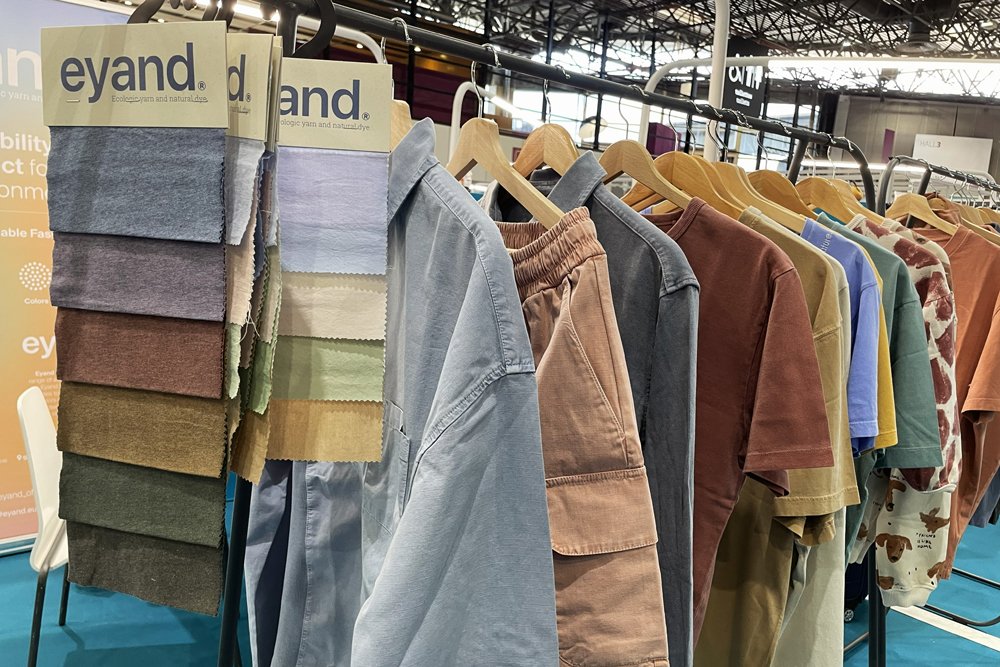
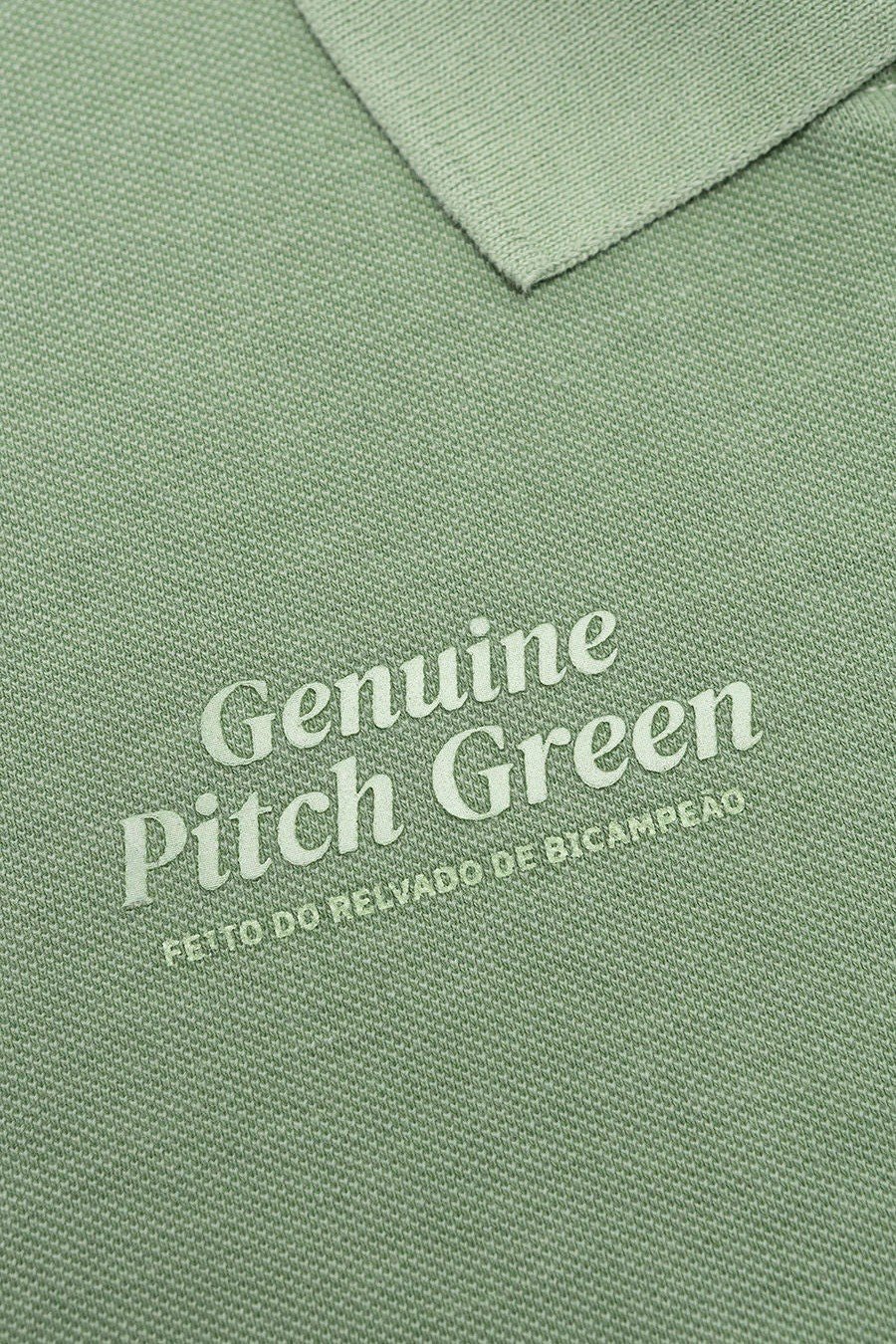
Eyand mainly uses mineral pigments, although it also works with some plant-based materials. Its main colour palette comprises around 85 colours and includes pigments produced from waste originating from mines in Zaragoza. At the same time, the company has been developing specific projects using different types of waste. «We have projects where we use wine, others where we use coffee and others where we use grass», Barth Perez explains.
 [©Sporting Clube de Portugal]
The operation gained scale mainly through its collaboration with Lacoste, which began five years ago. The French brand was Eyand’s first major customer, and the partnership includes production associated with Roland Garros, using clay from the tennis courts, in a process that has already exceeded 600,000 garments. «Lacoste helps us a great deal», states Barth Perez, adding that «having visibility through a brand like Lacoste gives other brands confidence in us». France accounts for around 70% of Eyand’s customer portfolio, while the US is also one of its main markets, with a major customer in New York.
Seeking new markets and fibres
With its Portuguese operation established, the TIS Group is seeking to internationalise the dyeing system while maintaining proximity to garment manufacturing locations. A trial is under way with a dyehouse in Casablanca, and the company has identified Morocco, Tunisia and Jordan as markets to explore. «The idea is to internationalise the process», the Eyand commercial director emphasises, adding that «for Portugal to survive, we need to build the brand’s name, and that has to happen outside Portugal».
Developing new applications is another area of focus. Cotton is currently the fibre that responds best to the dyeing process, while trials are being carried out with polyester. As for wool, «we are considering dyeing the yarn directly, because garment dyeing requires very complicated machinery, as the fibre generates a lot of friction. So, our idea is to dye the wool yarn and develop a colour range», Barth Perez concludes.