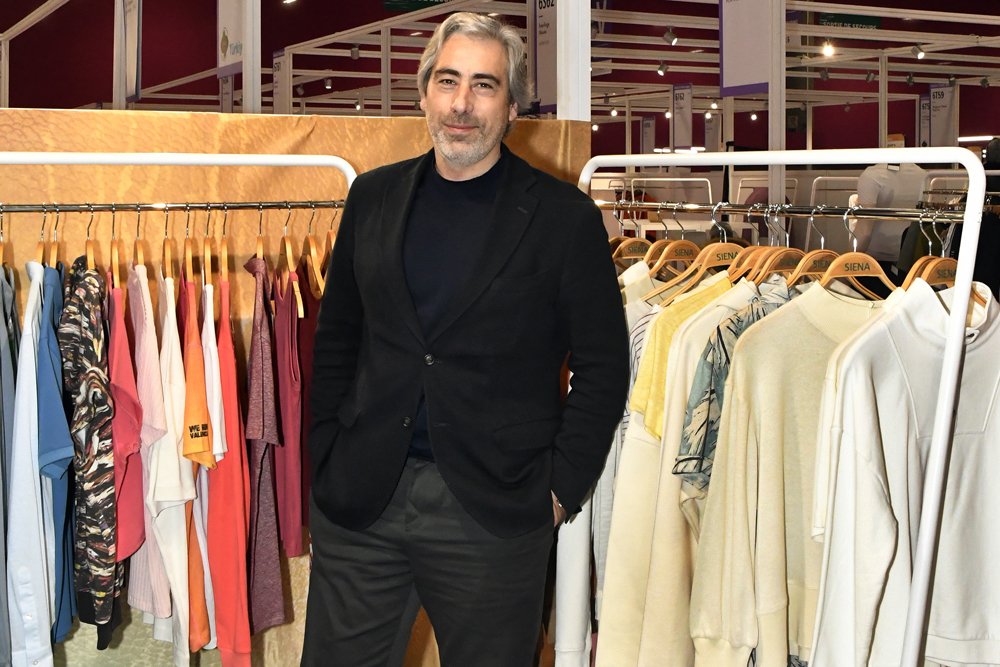
The reduction in market uncertainty regarding the supply and price of raw materials means that prospects for Siena’s business are more positive this year than in 2024, with growth forecast between 10% and 15%. “This year was better,” acknowledged Ricardo Ferreira, Board Member of the company, during the latest edition of Première Vision in Paris. “We managed to have greater consistency, and we didn’t have as many unpleasant surprises,” he explained.
With around 100 employees split between the industrial unit and the commercial area, the company is maintaining its strategy of moderate growth, prioritising the sustainability of the operation. “Our focus is to keep the business stable and sustainable. We don’t want to grow too much and then deal with the downside,” stressed Ricardo Ferreira.
 Exports cover practically all of Europe, with the US accounting for around 10% of sales volume. Recent tariff changes could open new opportunities in the North American market, he believes. “There are countries where tariffs were far higher than ours,” meaning that “there are situations in which we will be able to be more competitive in the US. There is a possibility of improvement,” the Board Member reaffirmed.
The company continues to invest in segment diversification, operating in the mid-high range, activewear and professional clothing, an area in which it intends to strengthen capacity. “The idea is to diversify as much as possible and cover the largest number of niches,” explained Ricardo Ferreira.
Facing the challenges
With an eye on the future, Siena is intensifying investment in digital infrastructures, upgrading its internal network, modernising software and preparing to integrate artificial intelligence tools applied to management, design and product development. “We need to be prepared,” summarised the Board Member, who will also move forward with the adoption of 3D modelling solutions.
Despite Siena’s positive performance, the Board Member expresses concern about the future of the Portuguese textile and clothing industry, marked by difficulty in attracting young people and by a shrinking active population. “It is difficult to replace people with the younger generations, the industry is not attractive to young people,” he said, admitting he fears a scenario of sector collapse “in 10 years” if renewal does not take place.
Ricardo Ferreira’s most incisive criticisms are directed at ultra-fast fashion platforms such as Shein and Temu, which he considers a significant risk to the competitiveness of the European textile sector, and which led the company to join an ANIVEC initiative in Brussels aimed at curbing the unregulated growth of these platforms.
“They distort consumers’ perception of value. It can mean the end of many businesses,” he emphasised, adding that these operations also have significant environmental, social and fiscal impacts. “There is complete tax exemption, the environmental impact is extremely serious, and socially, what goes on in those countries is unregulated and uncontrollable. It is completely deregulated and unfair,” he concluded.
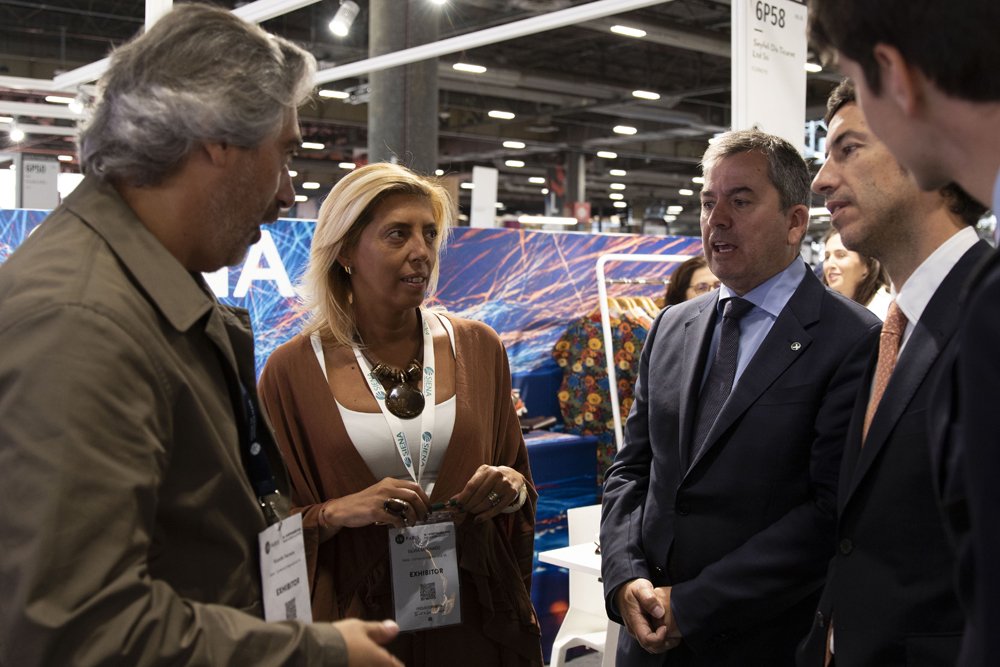 Ricardo Ferreira and Sílvia Machado (left) during the visit of the Portuguese Secretary of State for the Economy to Première Vision in September 2025