With a turnover of around 500,000 euros last year, corresponding to a 15% increase compared with 2024, BW Fashion, which specialises in private label knitwear production, remains focused on small runs and higher value-added products. In recent years, developments have centred on «more sustainable raw materials, such as recycled and organic yarns. We remain focused on meeting customers’ needs and on producing quality products. Our strength lies in smaller production runs, with greater attention to detail», Bruno Simões, owner of BW Fashion, tells Portugal Têxtil. Most raw materials come from Italy, although the company continues to source some cotton yarn in Portugal.
In addition to using recycled and organic raw materials, the company sends cutting waste for recovery through a partnership with J. Gomes, a textile recycling specialist based in Covilhã.
BW Fashion works with minimum quantities of 75 pieces per colour, favouring differentiated products over basics, and Bruno Simões highlights the use of cashmere blends as one of its latest focuses. According to the owner, the company purchases the yarn, carries out knitting and garment manufacturing in-house and delivers the finished product to the customer.
With annual production of between 20,000 and 25,000 pieces, the company exports 85% of its output, with the US, France and Spain as its main markets. Regarding the US market, Bruno Simões says that, so far, he has not seen any impact on orders arising from the imposition of tariffs. «The customer tells us that, regardless of the tariffs, whatever they buy in Portugal they will continue to need to buy here», he adds.

For 2026, Bruno Simões expects a more challenging environment. «We are halfway through the year, and there has been a decline in some markets, such as the Netherlands and Portugal. On the other hand, other markets are growing, including France and the US», he reveals.
Even so, BW Fashion has «work practically secured until the end of the year», and the company’s owner expects to end 2026 with results similar to those recorded in 2025. «I hope to remain close to the previous year in terms of figures, but the entire cost structure, which is rising because of the international context, could mean that turnover is slightly lower than last year», he explains.
Modernisation and commercial promotion
Over the past three years, BW Fashion has invested around 120,000 euros in modernising its knitting and garment manufacturing machinery, as well as in installing solar panels. According to Bruno Simões, this modernisation increased production capacity by around 20%, while the solar panels provide approximately 45% of the energy consumed annually by the company.
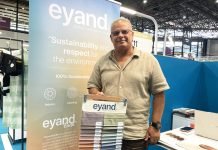
BW Fashion took part in Intertex for the first time this year as part of its strategy to attract new customers. After suspending its participation in international trade fairs, with its last appearance having been at Munich Fabric Start in 2020, following the pandemic and a reorganisation of its customer portfolio, the company has once again strengthened its commercial promotion. «Since the textile cluster is in the North, we find it very difficult to receive visits from new customers. So, we must do exactly the opposite: we have to put ourselves out there», says Bruno Simões. According to the owner of BW Fashion, investment in international trade fairs ceased to make sense at a time when existing customers «were taking up practically all of our production capacity for a period». At its Intertex debut, the company established contacts «that could become interesting, from markets such as the US and Switzerland».
Future projects include the adoption of wholegarment technology. «We aim to move towards fully fashioned knitting machines. Within a couple of years, we will try to make that happen», reveals the company’s owner, who believes this development «will reduce pressure on garment manufacturing».