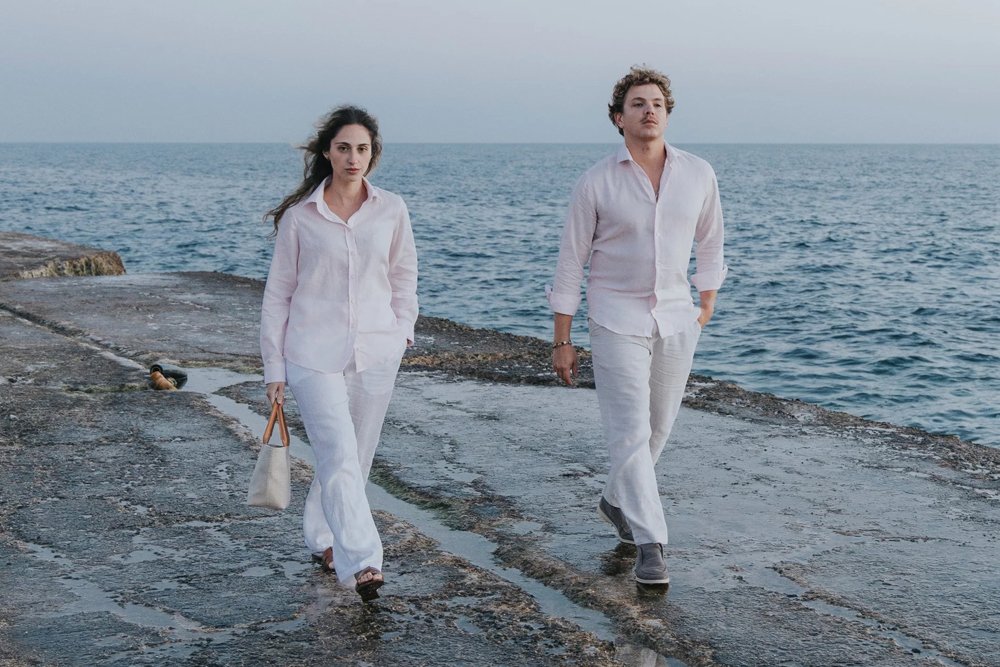
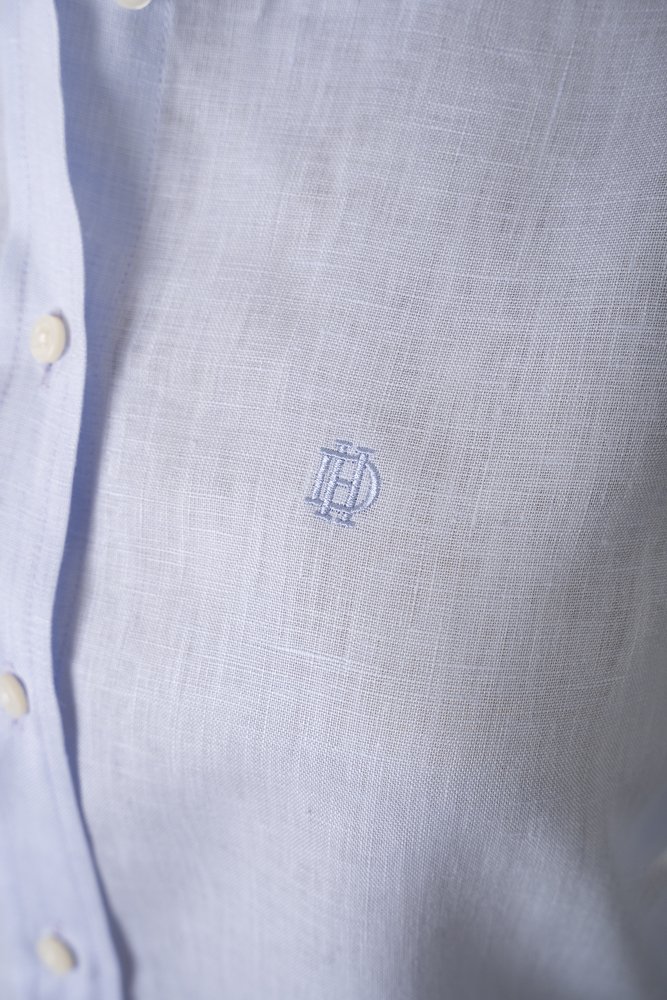
Based in the town of Cucujães, in Oliveira de Azeméis, D’Heritage made its debut with a collection of 22 styles focused on shirts, using materials such as linen and organic cotton, alongside made-to-order leather goods.
The brand’s history dates back to October 1974, when Mário Pimenta Gonçalves founded a manufacturing unit specialising in shirts and uniforms, which closed in 2024. According to Diogo Gonçalves, grandson of the founder of the former garment manufacturer and co-founder of D’Heritage alongside his father, rising yarn, energy and labour costs, together with the impact of the pandemic and the relocation of orders to lower-cost production markets, led to the closure. «We were not an isolated case, and that also played a part: when dozens of companies around you close, customers and suppliers close at the same time, and both sides suffer losses», he explains to Portugal Têxtil.
 [©D’Heritage]
Product development is carried out in-house, including material selection. Garment manufacturing, finishing, labels and packaging are entirely Portuguese, while raw materials and dyeing largely originate from countries such as Belgium, Spain and Turkey. Pattern making is handled by a professional who has worked with the family for several years, while manufacturing is carried out by three partner workshops in the region, selected based on workmanship quality, capacity for small production runs, meeting deadlines and working conditions.
Brand takes flight
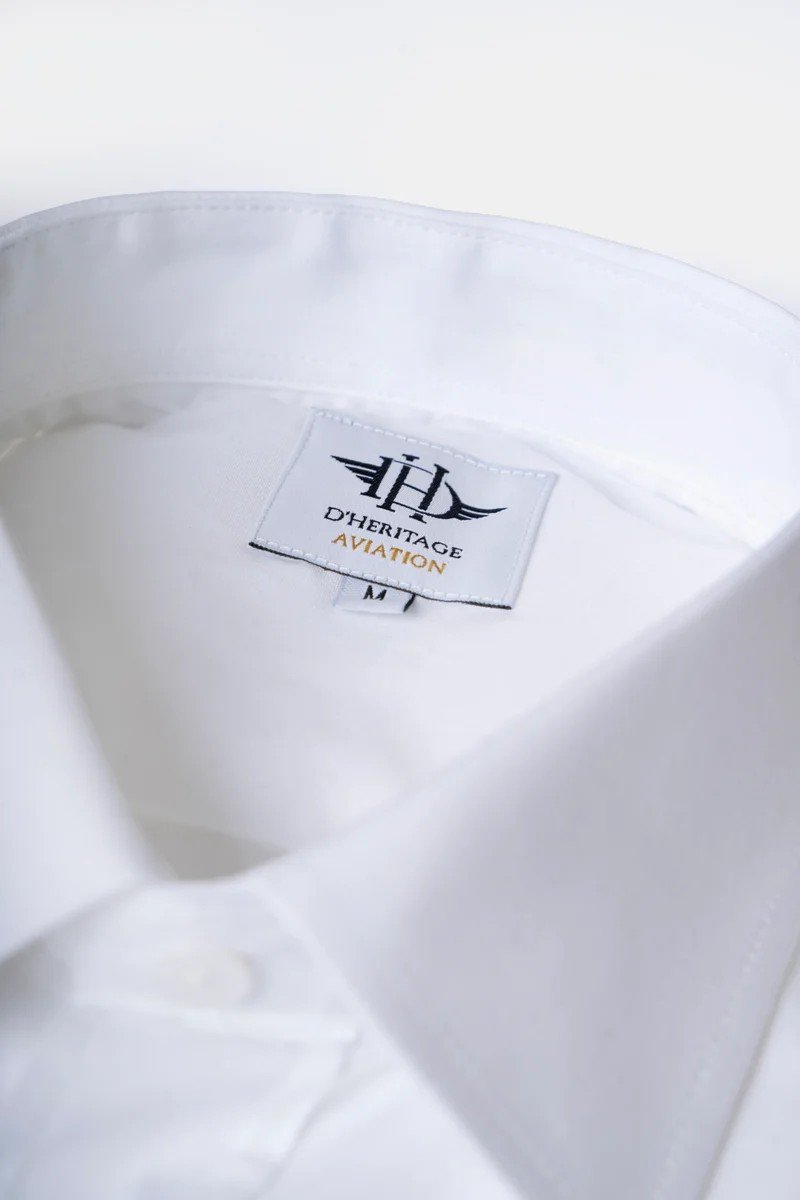
D’Heritage also has a line dedicated to professional aviation clothing, D’Heritage Aviation, which also includes caps and bags. «It was not exactly diversification; it was a return», the founder explains about D’Heritage Aviation, drawing on the family company’s experience in uniform manufacturing. The line was developed to meet the specific demands of working on board aircraft, including durability, comfort and prolonged wear. «The potential lies in it being a more predictable channel. Professional clothing meets a specific need and follows a replenishment cycle that fashion does not have», he emphasises.
 [©D’Heritage]
Portugal is currently the main market, with Spain emerging as the next priority, followed by other European markets where Portuguese manufacturing already enjoys a strong reputation.
For Diogo Gonçalves, the biggest challenge is reaching consumers. «We know how to make the product; it is what our family has been doing for more than 50 years. A garment manufacturer works for a limited number of customers and knows them. A brand can work for thousands of people and not know any of them. That changes everything: the language, response times, the way the product is presented and even the need to explain why a shirt costs what it costs», he stresses.
Priorities for 2026 include consolidating the shirt range, entering the multibrand retail channel and launching the winter collection, which will include the brand’s first piece of outerwear. For the founder, repeat purchases are one of the main indicators for assessing the brand’s performance in its first year. «It is not about selling a shirt; it is about selling a second one to the same person», Diogo Gonçalves emphasises.
Looking ahead, D’Heritage is considering the possibility of having its own production facilities, although this will depend on sales volume growth. «It is an ambition, not a plan with a set date. It will only make sense when the volume justifies it. Until then, the partner workshop model gives us flexibility and avoids fixed costs that we know can become a burden when the market changes», the founder concludes.