For centuries, wool was a source of prosperity in regions such as Beira Interior and Alentejo. The factories of Covilhã once employed thousands and exported worldwide. Today, around 15 companies remain active in the sector, employing between 2,500 and 3,000 people, according to data from ANIL – the National Association of the Wool Industry. The picture is one of resilience, though far removed from the sector’s former scale.
“The past 25 years have been devastating. Our entire textile industry – and especially woollens – has shrunk dramatically,” summarises José Alberto Robalo, president of ANIL.
He recalls a turning point: China’s entry into the World Trade Organization (WTO) in 2002. “In the first quarter of that year, Europe imported 750 million pairs of trousers — more than double in just three months. That had to have an impact across our entire textile value chain,” he says.
For Robalo, the core problem is that globalisation advanced without reciprocal rules. European companies must comply with strict environmental, labour and social standards, yet they compete with countries that often rely on child, forced or unregulated labour.
“You cannot have global trade without global rules. There must be reciprocity. We can’t have workers in Europe with rights while encouraging trade with those who use slave or child labour,” he argues.
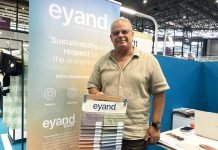
 José Alberto Robalo
A nearly complete chain – but with limitations
Portugal produces around 11,000 tonnes of wool per year, according to ANIL. However, much of this production holds little value for domestic industry and is sold at residual prices. “Either we invest in breed improvement to enhance wool quality, or the industry won’t want it — not even for free,” says Robalo.
Portuguese wool, mainly from native breeds such as white and black Merino, is coarser than Australian or New Zealand wool. According to ANCORME – the National Association of Merino Sheep Breeders, around 30,000 animals are registered (17,000 black Merino and 15,000–16,000 white Merino). Each ewe produces on average 2.3 to 2.5 kg of wool per year, while rams can reach 5 kg.
“These are registered, verified animals. Our work also focuses on preserving genetic lines, safeguarding biodiversity, and improving key traits such as wool yield,” explains Tiago Perloiro, ANCORME’s managing director. Portuguese Merino typically measures 19–26 microns, compared with 14–15 microns for superfine Australian Merino. Yet, he notes, Portuguese wool stands out for its strength, absorbency and uniformity, and can be used in clothing, footwear, carpets and technical applications.
Other challenges include a lack of scale and, crucially, the absence of RWS (Responsible Wool Standard) certification, now a requirement in international markets to ensure animal welfare and traceability.
“No international client fails to ask if the yarn is certified. We don’t have certified Portuguese wool – and that’s an immediate barrier. If we did, many national companies could use it. We’re losing value by not pursuing this path,” says Robalo.
The situation worsened with the closure in July of Portugal’s last industrial scouring plant, in Guarda. Without this facility, Portuguese wool must be shipped to Spain, France or even Morocco for washing before industrial use — raising transport costs, increasing the carbon footprint and reducing competitiveness, while also raising concerns over production sovereignty.
The closure prompted mobilisation from producers and manufacturers, who signed a petition submitted to Parliament, led by Ovibeira – the Association of Livestock Producers, representing more than 1,800 farmers from Beira Baixa.
“It is urgent to act to enhance this heritage, creating conditions for producers, artisans, processors and local entities to work with dignity and sustainability,” the petition reads. It calls for a national wool valorisation strategy, including incentives for local transformation through support for small washing, spinning and manufacturing units, the construction of a new national scouring facility, initiatives to promote and market Portuguese wool domestically and abroad, and the creation of a ‘Portuguese Wool’ certification guaranteeing origin, quality and sustainability.
Sustainability as a strength
The industry faces other challenges common to manufacturing sectors — a shortage of skilled labour and textile engineers, high turnover, and elevated operational costs that threaten the future of the sector even when demand exists.
Improving competitiveness, Robalo argues, depends on international cooperation and solidarity among smaller European countries. “We must find areas of convergence to make ourselves heard. Otherwise, we have no weight acting alone,” he warns. A common front of wool-producing European nations could better defend the sector’s interests both within the EU and globally.
Despite current headwinds, wool retains major competitive advantages. It is natural, renewable and biodegradable, with unique insulating, breathable and odour-resistant properties. For ANIL, sustainability is the key to the future.
“Wool has been around for over 3,000 years. If it weren’t sustainable, it wouldn’t have survived this long,” says Robalo. “As long as we keep that in focus, there’s a bright future ahead. The Portuguese wool industry is among the leaders in environmental standards – we must make that value visible to clients and consumers.”
 Portuguese wool could also find new opportunities in alternative sectors. ANCORME is exploring innovative uses for the fibre. “We’re developing projects such as using wool pellets in agriculture to improve water retention and soil fertilisation, and replacing rubber in synthetic turf with wool pellets. The environmental and health benefits for athletes are huge,” says Perloiro.
The association has also partnered with Portuguese brands such as Rosa Pomar to produce high-quality Merino yarns. “Our wools may not have the 15 microns of Australian Merino, but they have other remarkable characteristics. The challenge is to build the bridge between production and industrial transformation,” he concludes.
To promote Portuguese Merino, ANCORME will organise another Wool Conference in 2026, in Évora. “We want to bring together producers, researchers and industry around wool, building a strong and innovative value chain. We need partners, entrepreneurs and new pathways. We have an exceptional product, and we want to show it to the world,” says Perloiro.