After calling last year for concrete measures from the European Union to tackle what they describe as unfair conditions created by e-commerce platforms, Euratex, on behalf of the national associations it represents, including Portugal’s ANIVEC and ATP, and the French associations UFIMH – French Union of Fashion and Clothing Industries and UIT – Union of Textile Industries, met again today, 1 September, at Première Vision and signed a joint declaration setting out new demands. Although they acknowledge that steps previously considered virtually unthinkable have already been taken, namely the introduction of a €3 duty per product category on orders entering the EU, they argue that further action is needed to ensure a level playing field for all companies operating in the European single market, whether or not they are based in the EU.
«One year ago, right here, we were being told that nothing could be done. Since then, the €150 exemption has been abolished and a €3 customs duty has entered into force: proof that Europe can act when it decides to», said Pierre-François Le Louët, co-president of UFIMH.
The introduction of this duty on each type of item in small orders is not, however, sufficient to address the problem created by the thousands of small orders arriving in Europe every day. «A €3 duty that is paid only once for ten identical garments is not a response commensurate with the scale of the problem. Our companies, our factories and our city-centre retailers are not asking for special treatment: they are asking for the same rules to apply to everyone», he added.
The associations are therefore calling on the European Commission to go further, namely by introducing a significant handling fee across the EU, above the €2 to €4 that have been suggested. The aim is for the fee to more realistically reflect the costs of processing and inspections by customs authorities, with a figure of around €10 per order being proposed.
Other measures include greater accountability for online platforms, namely through the application of the “Deemed Importer” concept, to ensure that operators facilitating the entry of products into the European Union clearly assume obligations relating to compliance with customs rules, as well as requiring the same level of detail in information on direct-to-consumer imports, in order to identify products, assess risks and ensure compliance with the rules.
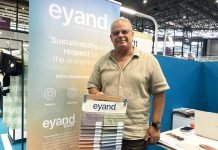
 Mário Jorge Machado [©Euratex]
The organisations present in Paris also argue that no new economic measures should be introduced before the combined impact of the €3 duty and the handling fee has been assessed and call for a reduction in the burden on European companies that comply with regulations.
«One year after the Villepinte Declaration, the first concrete steps are in place. This is a good start, and France has clearly been a driving force. But there is no reason to ease the pressure: ultra-fast-fashion platforms are more agile, faster and often more inventive than our procedures. To restore fair competition, we must keep acting together — as French and European federations, alongside our international partners. Alone, we raise the alarm; together, we carry weight», concluded Olivier Ducatillion, president of UIT.