The winners will be announced on 25 June during the textile recycling trade fair, which takes place on 24 and 25 June in Brussels. The Textiles Recycling Awards recognise companies, projects and initiatives that are accelerating the textile industry’s transition towards more circular models, rewarding innovation, impact and leadership across the textile recycling value chain.
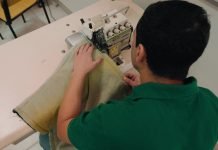
Circlo is competing with its project dedicated to developing circular knitted fabrics produced with recycled and traceable raw materials. Created within Pedrosa & Rodrigues, the brand was established to recover industrial textile waste and transform it into new, high-value-added materials.
The strategy focuses on three main areas: its own collection of circular knitted fabrics, the recovery of post-industrial waste for solutions developed according to customers’ requirements and, at a later stage, the creation of a fully closed-loop system that also includes post-consumer clothing, explained Olga Soares, business development manager, during the presentation of Circlo at Première Vision in Paris.
«This recognition reinforces our commitment and our mission to transform the textile industry towards a more sustainable future, making the most of existing resources and promoting a more circular approach to material development», Circlo stated on LinkedIn in response to being announced as a finalist for the award. «Being part of this journey motivates us even more to continue investing in innovation, responsible sourcing and solutions that reduce environmental impact while maintaining high quality standards», it added.
In the Textile Recycling Project of the Year category, Circlo is competing against projects from Circ, Spain’s Recover, Australia’s BlockTexx and China’s Jiangsu Recycolor New Materials. Circ has developed technology capable of separating polyester and cotton in blended fabrics, one of the biggest challenges in textile recycling, while BlockTexx focuses on recycling blended fibres through chemical technology that can recover polyester and cellulose from complex textile waste, and Recover positions itself as a producer of recycled cotton fibres. Jiangsu Recycolor New Materials, meanwhile, develops solutions for recycling and recovering coloured textile fibres, reducing the need for additional dyeing processes and lowering environmental impact.
 [©Circlo]
Other Textiles Recycling Awards finalists include, in the Retailer of the Year category, Mango, Armedangels and Beyond Retro. The Spanish retailer was nominated for its work on integrating circularity into its value chain. Mango has been strengthening its used clothing collection programmes, incorporation of recycled fibres and development of collections designed to facilitate future recycling, incorporating these initiatives into its “Sustainable Vision 2030” strategy.
German sustainable fashion brand Armedangels, for its part, has built its business model around durability, the use of recycled and organic fibres and responsible production, with resale and recycling programmes and the development of products designed to extend the lifecycle of garments.
Specialising in vintage fashion and textile reuse, Beyond Retro has become an international benchmark for giving second-hand clothing a new life. The company works on the recovery, sorting and reintroduction of used garments into the market, preventing large volumes of textiles from ending up in landfill.
Among the candidates for Product of the Year are Alsico, Teixits Torné, Beyond Retro, Elis and FibreTrace. Alsico was recognised for Fitzroy, a product developed with a focus on circularity and durability in the workwear segment, while Spanish company Teixits Torné developed a solution to transform mixed-colour textile waste into new high-value-added circular fabrics, reducing the need for new dyeing processes and lowering water and chemical consumption. Beyond Retro is nominated with Bank & Vogue for a collaboration that transforms end-of-life clothing into premium accessories. The Soho Bag uses recovered and recycled materials, demonstrating the potential of creative reuse in the luxury segment.
Elis presented a closed-loop solution for workwear in which used uniforms are recycled and transformed into new workwear garments, promoting a model of continuous fibre reuse, while FibreTrace is nominated for technology that enables luminescent pigments to be incorporated directly into textile fibres, ensuring traceability throughout the entire value chain, and which is being used by companies such as Impetus.
In the Textile Collection & Sorting category, the finalists reflect different approaches to collecting, separating and recovering textile waste. Austria’s Saubermacher was nominated for a collaborative initiative that transforms used textiles into new recycled fibres, while India’s Green Worms Waste Management focuses on integrating local communities into sustainable waste management systems. From Brazil comes the Teciteca & Teci project, which combines textile preservation, education and circularity through a sustainable museum, and Manuela Catania, which presents a more artistic and sensory approach to the reuse of discarded materials. Texet Benelux was recognised for its “Untagged Movement” initiative, focused on collecting and reintroducing unbranded textiles into the market, promoting reuse and extending product lifecycles.
The finalists for the Textile Recycling Innovation award reflect the sector’s growing focus on advanced technological solutions to increase the efficiency of textile recycling. Chinese companies Jiangsu Reo-Eco Tech Group and Yuantian Biotechnology stand out for developing enzymatic processes capable of separating fibres with a lower environmental impact, while Spain’s Picvisa uses artificial intelligence and computer vision to automate textile waste sorting. MacroCycle Technologies has developed a chemical solution for recycling synthetic textiles at lower production costs, while Renasens has developed technology to transform mixed textile waste into high-quality recycled fibres.
Finally, the Rising Star award recognises emerging projects and innovative initiatives linked to textile circularity. The finalists include UK-based Epoch Biodesign, which uses biotechnology and enzymes to recycle fibres and plastics, and Matoha, which develops portable fibre identification systems using spectroscopy to facilitate sorting processes. Beyond Retro is also nominated for the collection developed in partnership with Seasalt, based on reused materials, as Green Worms’ End Textile Waste Alliance initiative focuses on collaborative collection and recycling networks. Completing the list is Fibre to Fibre, a project focused on financing and developing circular solutions for the fashion industry.